
Kindly engage with the content of unit 3 and do all related activities.
7. Connectivism as a Theory of Learning
7.5. Classroom applications of connectivism
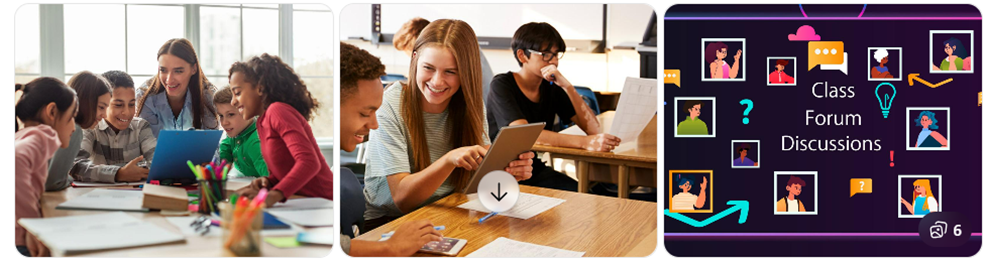
In classroom practice, connectivism shifts the role of both teachers and learners and integrates technology meaningfully into teaching and learning.
Integration of digital learning platforms: Teachers can incorporate platforms such as Google Classroom, Moodle, or WhatsApp to extend learning beyond the physical classroom. These platforms enable learners to access resources, participate in discussions, and collaborate asynchronously. For instance, teachers can use social media platforms like X (formerly Twitter) or LinkedIn to connect students with industry experts, authors, or other classrooms around the world. Instead of writing a report that only the teacher reads, students might blog about their learning or create YouTube videos, allowing them to contribute to the global network of knowledge.
Networked and collaborative learning: Learners must be engaged in group tasks that require interaction with peers, experts, or online communities. For instance, students may participate in online forums, co-author documents, or engage in virtual discussions, thereby building knowledge collectively.
Emphasis on information literacy: Teachers must guide students in evaluating the credibility, relevance, and accuracy of information found online. This is critical in an era of abundant and sometimes unreliable information.
Use of Open Educational Resources (OERs): Students are encouraged to explore diverse sources such as videos, podcasts, blogs, and academic websites. This broadens their exposure and supports self-directed learning.
Teacher as facilitator and connector: The teacher’s role evolves from being the sole source of knowledge to a facilitator who helps learners make meaningful connections between ideas, resources, and people.
Personalized and self-directed learning: Learners take responsibility for their own learning paths, selecting tools, resources, and networks that suit their needs and interests.
Real-world and lifelong learning orientation: Classroom activities must be linked to real-life contexts. Students may follow current events, engage with global issues, or interact with professionals online, fostering lifelong learning habits.
In short, connectivism represents a shift from traditional, content-centered learning to network-based, technology-enhanced learning. It acknowledges that in a rapidly evolving digital world, the ability to connect, adapt, and learn continuously is more important than static knowledge. In classroom practice, this translates into collaborative, technology-supported, and learner-driven approaches that prepare students for lifelong learning.
Activity: Discuss the challenges you may encounter while implementing connectivism learning theory in classroom settings.